Why Islam
What Is the Purpose of Life in Islam?
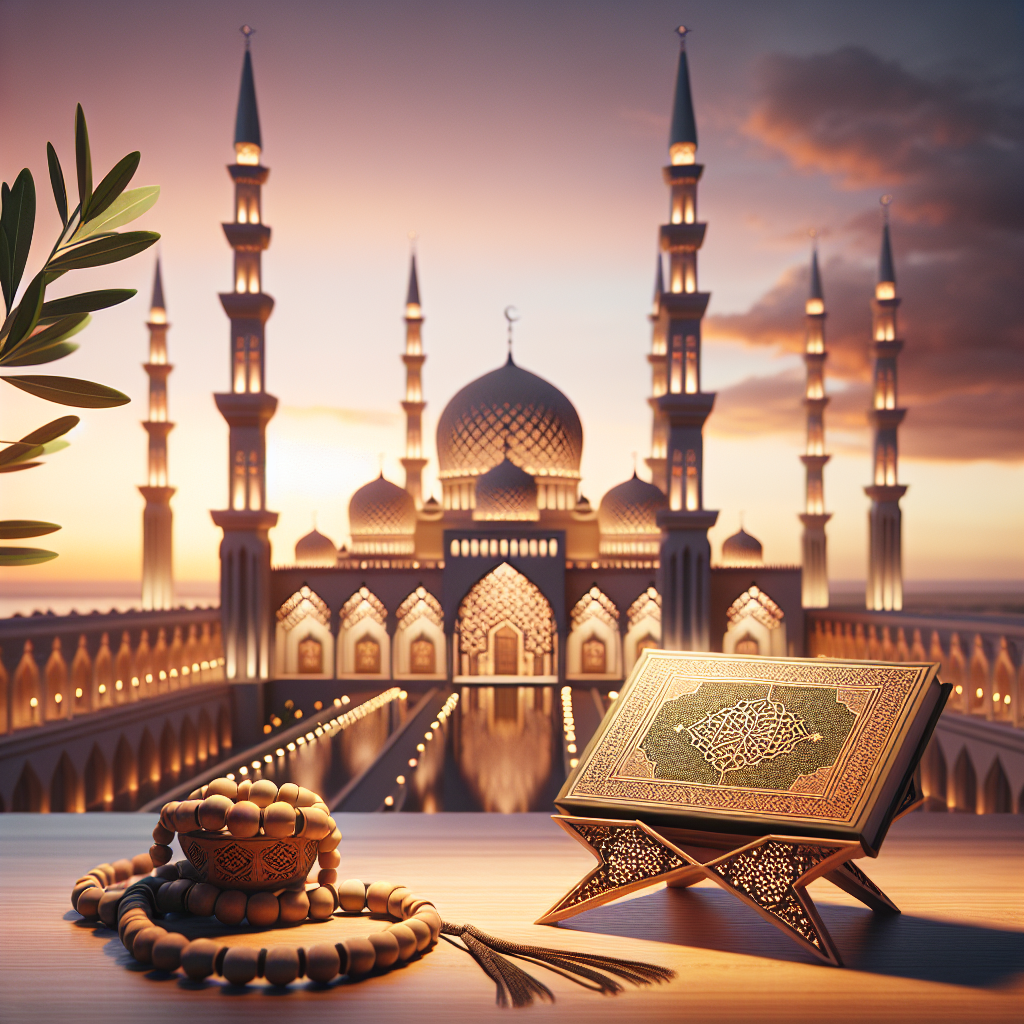
What Is the Purpose of Life in Islam?
Introduction
Have you ever wondered why achieving our biggest dreams can still leave us feeling empty? Many people reach the milestones they once longed for wealth, fame, success yet find a lingering restlessness inside. We seek happiness in career triumphs, gadgets, or social media likes, but the satisfaction quickly fades. This is because our hearts crave a deeper meaning and purpose beyond material gains. Islam addresses this universal human question head on with a compelling answer. According to Islamic teachings, we were created with a noble purpose and blessed with free will to pursue it.
In Islam, life is not a random accident or a mere pursuit of pleasure; it is part of a divine plan. Our Creator tells us clearly why we are here, and understanding this purpose brings comfort, direction, and hope. It transforms the way we live our daily lives and how we handle successes and trials. Islam’s answer is both spiritually fulfilling and logically sound: God created us to recognize Him and willingly worship Him, building a life of goodness and devotion. To guide us, Allah (God) appeals to our reason and our conscience, offering the promise of eternal Paradise as the ultimate reward for those who believe and do good, and warning of Hellfire as a consequence for those who arrogantly reject the truth and do evil. This “carrot and stick” approach isn’t meant to scare us blindly into faith, but to motivate us to seek the truth with open hearts, knowing that our choices have profound significance. The beauty of Islam is that it not only answers the question of life’s purpose but also provides a complete roadmap on how to fulfill that purpose in a way that leads to true happiness, justice, and peace both in this world and forever in the Hereafter.
In this article, we’ll explore the Islamic perspective on life’s purpose in a clear and conversational way. We will look at what the Quran says about why we were created, how worship in Islam goes far beyond rituals, and why life is a test of character and faith. We’ll discuss how the human soul naturally longs for a connection with Allah, and how living in line with our purpose brings contentment that worldly pleasures cannot match. We’ll also touch on the concepts of moral responsibility and free will the gifts that enable us to choose our path. Furthermore, we will see how success in Islam is defined differently from success in the materialistic sense, focusing on eternal success rather than just worldly achievements. Every aspect of life can be an act of worship when done with the right intention from prayer and charity to kindness and seeking knowledge. We’ll highlight the role of Prophets in guiding humanity towards this purpose throughout history. We will compare Islam’s answer to the purpose of life with alternative views, showing how Islam’s perspective uniquely fulfills our need for meaning. Throughout, we’ll include relevant Quranic verses and authentic hadiths that illuminate the topic, and share insights from respected Islamic scholars. By the end, we hope to show the truth and beauty of Islam’s view on life’s purpose in a way that is easy to understand and relate to.
Let’s begin this journey of understanding, which might just change how you look at every day of your life. After all, knowing why we are here is the first step to living a life of real purpose and peace.
Table of Contents
- Created to Worship Allah — Our Core Purpose
- Life as a Test: Trials and Growth
- The Soul’s Longing: Connection with Allah
- Free Will and Moral Responsibility
- True Success: Beyond Wealth and Status
- Worship in Every Aspect of Life
- Guidance through Prophets
- Perspectives of Islamic Scholars
- Why Islam’s View is the Best
- Conclusion: Living Your Purpose
- Recommended Books on Life’s Purpose
- References
Created to Worship Allah — Our Core Purpose
In Islam, the core answer to why we exist is given directly by Allah in the Quran. Allah says:
“And I did not create the jinn and mankind except to worship Me.” (Quran 51:56)
This powerful verse from Surah Adh Dhariyat (51:56) concisely states that the primary purpose of every human (and jinn, a type of unseen being) is to worship Allah (God) alone. But what does “worship” really mean here? In Arabic, the word used is ‘ibādah, which comes from the root meaning servitude and submission. Worship (‘ibādah) in Islam is not limited to rituals like prayer and fasting it encompasses every act done to please Allah. This means living all parts of our life in obedience to God, with love, reverence, and hope in His mercy. Of course, worship includes the well known religious duties (such as the five daily prayers, fasting in Ramadan, charity, etc.), but it goes far beyond that. It includes being honest, showing kindness, helping others, seeking knowledge, and avoiding sins essentially, doing what Allah has commanded and avoiding what He forbade in every area of life. If we make our intentions pure for Allah, then everyday actions like caring for our family, studying, or even earning a living honestly become acts of worship too.
It’s important to note that Allah does not need our worship; He is completely free of need. Immediately after stating our purpose, Allah says in the next verses:
“I do not want from them any provision, nor do I want them to feed Me. Indeed, it is Allah who is the Provider, the Lord of Power, Ever Mighty.” (Quran 51:57–58)
This reminds us that when we worship Allah, it’s for our own benefit, not His. We need Allah; He does not need us. Worshiping Allah is how we fulfill the purpose of our creation and align with the truth of the universe. It’s like a key fitting into the right lock when we live to worship and please Allah, we experience true peace and fulfillment in our hearts. We also earn Allah’s pleasure and the hope of eternal reward.
Allah created human beings with something very special: free will and intellect. Unlike the sun, the trees, or even the angels, which all obey Allah automatically, humans (and jinn) have the freedom to choose whether to obey or disobey. This is why Allah addresses humans specifically in the purpose verse only we (and jinn) have the choice to worship Him willingly. Allah wants us to recognize Him and choose to worship Him out of faith and love, not by force. In a sense, true worship requires this free choice. Our worship is meaningful because we have the option to turn away yet when we turn toward Allah, we fulfill our destiny. As one scholar explained, “They have not been created to serve any other besides Allah... On earth only jinn and men have been granted the freedom to choose to serve Allah... within their sphere of choice”. This freedom is what makes our worship a higher level of devotion we willingly submit ourselves to God after recognizing the truth.
Some early Islamic commentators even said that “to worship Me” in the verse 51:56 means “to know Me”, highlighting that knowing Allah is the first step that leads to sincere worship. While our ultimate purpose is to worship God, we can only truly do that by seeking knowledge of Him and His guidance. The more we learn about Allah’s names, attributes, and blessings, the more our hearts are drawn to worship Him wholeheartedly. Knowing God and worshiping God are deeply connected you can’t truly have one without the other.
Importantly, worship in Islam is not just about being a devout individual; it also has a larger role for humanity. Allah honored humans by making us His Khalīfah, or stewards, on earth. Being a khalifah means we are entrusted to take care of this world and uphold justice and goodness as Allah’s representatives. The Quran says:
“And [mention] when your Lord said to the angels, ‘Indeed, I will make upon the earth a successive authority (Khalifah).’” (Quran 2:30)
And in another verse:
“It is He who has made you successors (vicegerents) upon the earth…” (Quran 35:39)
This role of stewardship is part of our purpose. We worship Allah not only through personal rituals, but also by building a just and ethical society, taking care of the environment, and treating others with mercy and fairness. In other words, living by Allah’s guidance in our social and earthly responsibilities is a form of worship too. We are servants of Allah and at the same time caretakers of His creation, which is a great honor and trust. So, the purpose of life in Islam can be summed up as: worship Allah alone through faith, devotion, and righteous living and thereby fulfill the role He gave us as good stewards on earth.
Life as a Test: Trials and Growth
If worshiping Allah and doing good are the purpose of our lives, one might wonder why life often involves so many challenges. Islam teaches that this worldly life is intentionally designed as a test. It’s not the final destination, but a temporary proving ground for our faith, character, and choices. Allah says in the Quran:
“[He] who created death and life to test you [as to] which of you is best in deed – and He is the Exalted in Might, the Forgiving.” (Quran 67:2)
Every person will face a unique set of tests in life. These tests can be hardships like illness, loss, or difficulties but they can also be blessings like wealth, health, and success. Both good times and bad times examine how we respond. Will we remain grateful, patient, and faithful? Or will we become arrogant, ungrateful, or despairing? This world is a temporary arena of trials, and through these experiences, our sincerity and moral fiber are proven.
Sometimes people ask, “Why does God test us? What’s the point?” The Islamic answer is that tests are for our own growth and evaluation, not because Allah doesn’t know us. Allah already knows everything about us, but we need to actualize our potentials and make conscious choices. Through tests, we discover our own strengths and weaknesses, and we have the opportunity to elevate ourselves spiritually. Passing a test for example, remaining honest even when lying would be easier, or staying patient in a hardship builds our character and brings us closer to Allah. It also makes us worthy of the reward Allah has prepared for the righteous. The Prophet Muhammad (PBUH) said:
“The greater reward comes with the greater trial. When Allah loves a people, He tests them…” (reported in Tirmidhi).
This means challenges in life are not a sign of Allah’s abandonment, but potentially a sign of His love He wills good for us by refining us through trials, much like a teacher wants their student to succeed through exams.
The Quran emphasizes that everyone will be tested, and that we should meet these tests with patience and faith:
“We will certainly test you with a touch of fear and famine and loss of property, life, and crops. Give good news to those who patiently endure – who, when faced with disaster, say, ‘Surely to Allah we belong, and to Him we will ˹all˺ return.’ Those are the ones upon whom descend blessings from their Lord and mercy. And it is they who are ˹rightly˺ guided.” (Quran 2:155-157)
From the Islamic perspective, life’s trials have purpose. They are not random suffering. They serve to distinguish the truthful from the liars, the faithful from the hypocritical. For example, when someone faces difficulty but remains devoted to God, it shows the depth of their faith. On the other hand, a person who only worships when life is easy, but gives up faith when life is hard, has not truly embraced the purpose of life. Allah says in the Quran that some people worship Allah on an edge if good befalls them they are content, but if a trial befalls them they turn back (Quran 22:11). We want to strive to worship Allah in all conditions, knowing that both good and bad times are part of our test.
Moreover, life as a test reminds us that this world is not the be all and end all. It’s a temporary phase before the eternal life to come. The Quran often describes the worldly life as a play, a passing enjoyment, or a deceptive appearance, compared to the Hereafter. For instance:
“And the life of this world is nothing but amusement and play; but indeed the Home of the Hereafter – that is the real life, if only they knew.” (Quran 29:64)
Realizing that life is a test helps us not to be overly attached to temporary pleasures or overly upset by hardships. We understand that our reaction to every situation is what truly matters. Success in Allah’s eyes is not measured by how much money we earn or how many hardships we avoid, but by how we conduct ourselves when we are wealthy or poor, healthy or ill, happy or grieving. Every circumstance is an opportunity to earn reward through gratitude in good times and patience in bad times.
Allah also tests us to purify us and distinguish the good from the evil. Another verse states:
“Every soul will taste death, and We test you with evil and with good as trial; and to Us you will be returned.” (Quran 21:35)
This means both difficulties (“evil”) and blessings (“good”) are tests. So if you have wealth, that’s a test will you be generous and humble or become greedy and proud? If you have poverty, that’s also a test will you remain patient and trust in Allah or will you resort to dishonesty? In all cases, life’s ups and downs are there to see who will strive for “ahsanu ‘amala” the best of deeds.
Ultimately, viewing life as a test gives us hope and purpose. We realize that suffering is not meaningless. If I endure a hardship while keeping my faith and doing what’s right, I am successful in Allah’s sight even if worldly people don’t see it. No pain or effort is wasted, because Allah sees it and will reward it. Likewise, if I have blessings and use them for good helping others, thanking Allah, not forgetting my duties then the blessing becomes a means to earn Allah’s pleasure. The Prophet (PBUH) once said:
“How amazing is the affair of the believer, for everything that happens to him is good! If something good happens, he is thankful and that is good for him. If something bad happens, he is patient and that is good for him.” (Sahih Muslim).
This positive outlook only comes when we understand life is a test and temporary, and that the real reward lies with Allah in the Hereafter.
The Soul’s Longing: Connection with Allah
Deep inside every human being is a spiritual heart that longs for something greater than this material world. We often try to fill that longing with relationships, entertainment, or achievements, but still feel that something is missing. Islam teaches that what our soul is truly longing for is a connection with our Creator, Allah. This connection is both the purpose and the greatest fulfillment of our lives.
The Quran beautifully describes how the heart finds peace only in remembering God:
“Verily, in the remembrance of Allah do hearts find rest.” (Quran 13:28)
This means that no matter what we do, our hearts won’t experience true contentment until we develop a strong relationship with Allah through remembering Him (known as dhikr in Arabic) and through worship. Think of it this way: our souls were created by Allah, and just like a plant needs water, our souls need the Divine connection to thrive. When we neglect our spiritual needs, it’s like depriving a plant of water the soul wilts in the form of stress, anxiety, and a sense of emptiness. But when we nourish the soul with faith and remembrance, it finds calm and satisfaction.
This is why even people who have everything materially can feel an inner void. You might have all the money, fun, and friends in the world, yet still feel uneasy or unfulfilled. On the other hand, a person remembering Allah, even in a simple setting, feels a unique tranquility. Faith and the remembrance of God feed a human soul in a way nothing else can.
Islam explains that Allah created humans with an innate nature called fitrah an inborn tendency to recognize and worship God. Prophet Muhammad (PBUH) said:
“Every child is born upon the fitrah (natural disposition)…” (Sahih Muslim).
This means deep down, our soul knows its Maker and inclines toward Him, much like a compass that naturally points north. However, as we grow up, life’s influences and distractions can cloud this innate knowledge. We might start seeking meaning in other things like chasing status, indulging in pleasures, or even following false ideologies. But these never truly satisfy the heart, because the heart was created to know and love Allah. When a person finally turns back to Allah even after years of wandering they often describe a feeling of “coming home”. It’s as if the heart says, “This is what I was looking for all along.”
One of the Names of Allah is As-Salām, which means “The Source of Peace.” By remembering Allah and living by His guidance, we allow His peace to enter our hearts. The Quran says about the believers:
“Those who believe and whose hearts find comfort in the remembrance of Allah…” (13:28, first part).
Notice it ties belief with the heart finding comfort. Belief (īmān) in Islam isn’t just an intellectual acceptance; it’s a heartfelt connection and trust in Allah. When you truly believe that Allah is with you, guiding you, listening to your prayers, and forgiving your mistakes, the heart feels safe and relieved. You are never alone, because you have a constant companion in your Lord who is closer to you than anyone else. This closeness is something we cultivate through daily prayers, supplications, Quran recitation, and simply talking to Allah privately, knowing He hears us.
There is a beautiful hadith Qudsi (a saying of Allah revealed to the Prophet PBUH) where Allah says:
“If My servant comes to Me walking, I go to him at speed” (Sahih al-Bukhari).
This illustrates that when we make an effort to get closer to Allah, Allah brings His mercy and love to us even more swiftly. In another hadith, the Prophet (PBUH) said:
“Allah is more pleased with the repentance of one of you than a man who loses his camel in the desert and then finds it suddenly.” (Sahih Muslim).
This shows that Allah loves when we turn to Him. He is not distant or uninterested; He is Al-Wadūd (The Loving) and wants us to find our fulfillment in knowing Him.
By living our purpose worshiping Allah we actually benefit ourselves by nurturing that soul connection. The daily salah (prayers), for example, punctuate our day with moments of calming contact with Allah. When a Muslim prays, he/she “leaves” the busy world for a few minutes and focuses on Allah alone, reciting His words. This has a healing, cooling effect on the heart. The Prophet Muhammad (PBUH) used to say, “Comfort us with it, O Bilal,” when asking his Companion Bilal to call the prayer, indicating that prayer was a source of comfort for him.
Beyond formal worship, simply remembering Allah in your heart and tongue saying “Alhamdulillah” (praise be to God) when something good happens, or “Hasbi Allah” (Allah is sufficient for me) when worried brings the heart closer to its Creator throughout the day. The Quran encourages believers to remember Allah often so that we stay connected (Quran 33:41).
This constant connection with Allah also shields the heart from many negative feelings. When we trust Allah, we worry less about things outside our control because we know He’s in control. When we feel Allah’s love, we feel less lonely or depressed. When we rely on Allah, we are less afraid of the future. In essence, the heart’s wounds are healed by the nearness of Allah. As one scholar famously said, “Whoever finds Allah has found everything, and whoever loses Allah has lost everything.”
In summary, part of our purpose in life is to develop this loving relationship with Allah. Worship in Islam is not just a duty; it’s also the path to inner peace. Our soul’s longing is satisfied only by the One who created it. That is why the remembrance of Allah is called the life of the heart without it, the heart is spiritually dead or at least starving. But with it, the heart is alive, content, and strong. This is a miraculous aspect of Islam: even in hardship, a believer who remembers Allah can find peace that others might find surprising. This peace is a sign that one is aligned with the true purpose of life.
Free Will and Moral Responsibility
Earlier, we mentioned that humans have been given free will the ability to choose our actions which is a key part of our purpose. With free will comes moral responsibility. Islam teaches that life is a test precisely because we have the freedom to make choices, and we will be accountable for those choices. Unlike animals, which mostly follow instincts, or inanimate objects that just follow the laws of nature, humans can distinguish right from wrong and choose which one to act upon. This is a great gift from Allah, and also a trust.
The Quran indicates that this moral responsibility is a heavy trust that other creatures did not bear, but humans did:
“Indeed, We offered the Trust (of moral responsibility) to the heavens and the earth and the mountains, but they declined to bear it and feared it; but man undertook to bear it. Indeed, he was unjust and ignorant (of its consequences).” (Quran 33:72)
This verse uses symbolic language to show that the role of being morally responsible and answerable to God is a serious one. Humans, in our naivety, took on this role which implies we shouldn’t be “unjust and ignorant” in how we fulfill it. We need to live up to this moral trust by using our intellect and free will properly.
Allah has given us a moral compass our fitrah (natural disposition) and also sent Revelation (the Quran) and Prophets to clearly tell us right from wrong. So, we have all the guidance we need. Our job in life is to choose the truth over falsehood, right over wrong, and submission over rebellion. Every single day, we face choices: to tell the truth or lie, to be kind or cruel, to remember Allah or ignore Him, to follow our selfish desires or follow Allah’s commands. These choices define whether we are fulfilling our purpose or not. Life is essentially a series of moral choices, and through them we either grow closer to Allah or drift further away.
The Quran often stresses personal accountability. One example is:
“Whoever does an atom’s weight of good will see it, and whoever does an atom’s weight of evil will see it.” (Quran 99:7-8)
And:
“Every soul earns not [blame] except against itself, and no bearer of burdens will bear the burden of another…” (Quran 6:164)
These verses remind us that we are responsible for what we do, down to even an atom’s weight of deed. We can’t blame others for our choices on the Day of Judgment. We won’t be able to say, “I sinned because so and so told me to,” because Allah gave each of us a conscience and guidance. Of course, environment and society influence us, but ultimate responsibility lies with the individual once they know right from wrong.
In Islam, morality isn’t relative or arbitrary; it’s grounded in Allah’s commands which align with human nature. For instance, honesty, justice, kindness, and keeping promises are always good, while lying, oppression, cruelty, and betrayal are always evil. Our intellect can grasp many of these truths, and revelation confirms and details them. Therefore, one aspect of our life’s purpose is to build a morally upright character essentially to become a person who loves what is good and hates what is evil, and who consistently chooses good actions. The Prophet Muhammad (PBUH) said:
“The best among you are those who have the best manners and character.”
Good character (khuluq) in Islam is actually a form of worship because it is lived obedience to Allah’s moral commands.
Another point to understand is that since life is a test of moral choices, temptations and inner struggles are part of the package. Allah allows us to be tempted by our lower desires (nafs) or by Satan’s whispers, not because He wants us to fail, but because overcoming these temptations strengthens our faith and morality. Each time you resist a temptation to do wrong for Allah’s sake, you have fulfilled your purpose in that moment. For example, a teenager might feel tempted to cheat on an exam to get a better grade. If he remembers Allah and decides, “No, cheating is dishonest and Allah is watching me,” and thus he doesn’t cheat, he has passed a significant moral test. This seemingly small act actually reflects the very purpose of life choosing obedience to Allah over the easy wrong choice. It’s in these moments, often unseen by anyone except Allah, that our true success is shaped.
The Quran asks a rhetorical question that really hits home:
“Did you think that We had created you without purpose, and that you would not be brought back to Us?” (Quran 23:115)
“Does man think that he will be left neglected (without accountability)?” (Quran 75:36)
These verses challenge the notion that life has no meaning or that we won’t answer for how we lived. Islam firmly states that we are here for a reason and we will return to Allah to account for that reason. Believing in the Day of Judgment is actually part of understanding our purpose. There will come a time when every human stands before Allah to be judged on how they lived how they used their free will. Those who strove to fulfill their purpose through faith and good deeds will find Allah’s promise true and generous. And those who ignored or denied their purpose will face the consequences of that choice.
Understanding free will and accountability also answers another common question: “Why doesn’t Allah just force everyone to be good?” If He wanted, Allah could have created us like angels who never disobey, or like robots programmed to always do right. But then our worship and goodness would have no meaning it wouldn’t be our choice. Allah wants us to choose Him over everything else. Think of it this way: a parent could do a child’s homework for them and save them effort, but that wouldn’t let the child learn or grow. Similarly, Allah gives us guidance and help, but we must make the effort to do the right thing ourselves. That effort is what earns us spiritual growth and reward.
Islamic teachings even say that on the Day of Judgment, people will be shown their lives and will even argue about their deeds, but ultimately each soul will acknowledge that Allah’s judgment is just. No one will be wronged in the least. Allah’s justice is absolute, and He also balances it with His mercy for those who tried sincerely but fell short (as we all do at times). Thus, we shouldn’t imagine our life as random or our struggles as pointless. We are dignified by Allah with the freedom to choose, and with that comes the dignity of bearing the consequences and rewards of those choices. In essence, life is about making the choice to worship and obey Allah, or to ignore and disobey and then meeting Allah one day to discuss how we did.
All of this might sound a bit heavy, but it’s actually empowering. It means your choices matter immensely. Even if the world doesn’t see or appreciate the good you do, Allah does, and He appreciates it. Even if you could “get away” with bad behavior in this world, you hold back because you answer to a higher authority. This personal sense of accountability is what makes a believer conscientious and sincere. It guides us when no one else is watching. It’s a key part of living a life of purpose in Islam.
True Success: Beyond Wealth and Status
Take a moment to think about how society often defines “success.” Many times, success is portrayed as having a lot of money, a prestigious job, a big house, fame, or indulging in all of life’s pleasures. While there’s nothing inherently wrong with wealth or achievement they can be blessings from Allah Islam redefines success in a much more profound way. From the Islamic perspective, true success (falaḥ) is attaining Allah’s approval and the eternal happiness of the Hereafter. Worldly achievements are fleeting and secondary compared to this ultimate success.
The Quran clearly contrasts worldly life with the Hereafter:
“The life of this world is nothing but play and amusement, but the Hereafter is far better for those who are mindful of Allah. Will you not then understand?” (Quran 6:32)
And in another verse:
“Whoever is saved from the Fire and admitted into Paradise has succeeded. For the life of this world is nothing but the delusion of enjoyment.” (Quran 3:185)
This verse (3:185) is telling us that real success = being saved from Hell and entering Paradise. Everything else people chase in this world is called “the delusion of enjoyment.” Why a delusion? Because it deceives many into thinking that’s all there is, but it doesn’t last. The richest, most famous person eventually leaves this world empty handed, just like the poorest person does. As the saying goes, “You can’t take it with you.” All the wealth and status remain behind. What goes with us into the grave are our deeds and God’s judgment of our hearts.
Islam encourages us to work and be productive in this life, but with the understanding that worldly gains are a means, not the end goal. They’re means to facilitate a good life and to use in good causes. But they are not the measure of your worth. The Prophet (PBUH) said:
“Allah does not look at your appearances or your wealth, but He looks at your hearts and your deeds.” (Sahih Muslim).
This means in Allah’s sight, a sincere heart and righteous actions are what matter not how fancy your clothes are or how big your bank account is. This is a relief, because it means everyone has equal opportunity for success. You don’t have to be rich or famous to “win” in life. You could be someone living modestly, but because of your faith and good character, you are hugely successful in the eyes of Allah.
On the other hand, someone could be a billionaire but if they’ve wasted their life in heedlessness and sin, then in reality they failed their life’s purpose. Prophet Muhammad (PBUH) said:
“The dunya (worldly life) is a prison for the believer and a paradise for the unbeliever.” (Sahih Muslim).
This means that a true believer restrains himself/herself in this world (like a person in prison who can’t just do whatever their whims want) because they are sticking to Allah’s guidance and not indulging in every desire if it conflicts with morality. Sometimes that feels restrictive, but it’s voluntary for the sake of Allah. Meanwhile, someone who doesn’t believe may try to treat this world like their paradise just pursuing pleasure without concern for God or morals. But that is short lived; when they die, if they haven’t secured Allah’s pleasure, they have nothing good waiting for them. For the believer, however, once they die, an eternal paradise of freedom and joy awaits, far outshining any sacrifices they made here. As one poet said, “This worldly life for a believer is like having to stay in a cage for a moment, but the Hereafter is an endless garden. For the disbeliever, this life is the only heaven they’ll know, and after it an unending prison.”
The Prophet (PBUH) also illustrated the insignificance of worldly life compared to the next with a vivid analogy. He said:
“By Allah, this world in comparison to the Hereafter is nothing but like if one of you dips his finger in the ocean – let him see what (water) it returns with.” (Sahih Muslim).
Imagine dipping your finger in the sea and pulling it out: only a few drops cling to it, whereas the ocean remains vast. Those few drops are like worldly life, and the endless ocean is the Hereafter. In other words, no matter how much of this world’s glitter we accumulate, it is negligible compared to the infinite bliss or infinite misery that await in the Hereafter.
Knowing this shifts a Muslim’s priorities in a big way. We realize that accumulating good deeds and seeking Allah’s forgiveness is far more important than accumulating dollars or social media followers. This doesn’t mean a Muslim shuns the world entirely rather, we engage with the world in a balanced way. We work, we study, we have families, we enjoy halal (permissible) pleasures, but we keep our ultimate goal in mind. We use the world, but we don’t let it own our heart. The heart’s true owner should be Allah. There’s a wise saying: “Have the world in your hand, not in your heart.” You can possess money in your hand and use it for good, but keep Allah in your heart as your true treasure.
This perspective also brings peace of mind. If one’s business fails or one loses some money, it’s not the end of the world because worldly losses and gains don’t define your success. What matters is whether you reacted with patience and trust in Allah (which becomes a success for you). If you suddenly strike it rich, it’s not purely a win unless you use it in obedience to Allah; otherwise it could become a trial leading to failure. The Quran tells the story of Qarun (Korah), a man at the time of Prophet Moses who was extremely wealthy and arrogant. He thought his fortune made him invincible. But Allah caused the earth to swallow him and his wealth as a punishment for his pride and misuse of blessings (Quran 28:76-81). The lesson is that wealth without gratitude and righteousness can lead to ruin, not success.
So, Islam doesn’t celebrate poverty nor glorify materialism. It reframes success to be taqwā (consciousness of Allah) and akhira-oriented. A poor person who is pious and content is described as successful in the Hereafter, while a rich person who is sinful is described as a loser in the Hereafter. Of course, a person can be both wealthy and successful in the Islamic sense if they are grateful, humble, and use their wealth in accordance with Allah’s guidance (many companions of the Prophet were like that, e.g. Abdur Rahman ibn Awf, Uthman ibn Affan (may Allah be pleased with them), who were rich and righteous). It all boils down to the heart and actions.
The Quran sums up the attitude of a believer striving for true success in a beautiful way:
“But seek, through that which Allah has given you, the Home of the Hereafter; and yet, do not forget your share of the world. And do good as Allah has done good to you. And desire not corruption in the land. Indeed, Allah does not love corrupters.” (Quran 28:77)
This was advice given to Qarun by wise people of his community. It means use your God given talents and wealth towards gaining Paradise (that’s your priority), but also enjoy the lawful share of worldly blessings that Allah allows (Islam isn’t about self denial of all joy). Do good to others with what you have, and don’t seek to do wrong. This balanced approach ensures you’re working for success in the Hereafter without neglecting a wholesome life here.
In summary, the purpose of life in Islam is tied to a definition of success that is eternal. True success is being a believer who lived a life of righteousness and earns Allah’s mercy. On the Day of Judgment, success or failure will be clear. The Quran, in a very short chapter (Surah Al ‘Asr, Chapter 103), says:
“By Time. Indeed, mankind is in loss. Except for those who believe and do righteous deeds and encourage each other to truth and encourage each other to patience.” (Quran 103:1-3)
This means from an ultimate perspective, most people are losing out (by wasting their lives), except those who have these four qualities: faith, good deeds, truthfulness, and patience. These are the truly successful people, even if in the worldly sense they didn’t have much. May Allah make us among them.
Worship in Every Aspect of Life
When we hear the word “worship,” many think of rituals like praying, fasting, or going to the mosque. Those are definitely important forms of worship in Islam, but the beauty of Islam is that worship (‘ibādah) is a comprehensive concept that extends to all areas of life. In fact, any lawful action done with the sincere intention to please Allah can become an act of worship. This understanding turns even mundane daily activities into opportunities to fulfill our purpose.
The Prophet Muhammad (PBUH) and the Quran taught us that worship includes things we might not normally label as “religious.” For example:
- Showing kindness to parents and serving them is a great act of worship.
- Earning an honest livelihood to provide for your family is considered worship.
- Spending time with your spouse and children lovingly is rewardable by Allah.
- Seeking knowledge (religious or beneficial worldly knowledge) is an act of worship.
- Even rest and recreation, if done with a good intention (like recharging your body to be more active in doing good), can be rewarded.
The secret ingredient that makes something everyday into worship is our intention (niyyah). Prophet Muhammad (PBUH) famously said:
“Actions are according to intentions, and everyone will get what they intended.” (Sahih al-Bukhari).
This means two people could do the exact same deed, like cooking a meal or exercising, but one person gets rewarded because they intended to gain strength to serve Allah or to feed their family out of care, whereas the other might just be doing it without any higher intent. By adjusting our mindset to say, “I’m doing this in a way that pleases Allah,” we invite Allah into every aspect of our life. Life then no longer has a split between “religious time” and “ordinary time” it all becomes potentially rewardable worship.
For instance, consider the act of helping someone in need. This is obviously a kind deed. But in Islam, if you help someone for the sake of Allah, not for praise or something in return, it becomes an act of worship. You’re doing it because you know Allah loves those who help others, and you want to make Allah happy with you. That intention transforms a social service into a spiritual service as well. The Quran often pairs worship of Allah with kindness to people, indicating that serving humanity (for Allah’s sake) is a part of serving Allah. One verse says: “Worship Allah and associate nothing with Him, and be good to parents, relatives, orphans, the needy, the near neighbor, the distant neighbor, the companion at your side, the traveler, and those your right hands possess…” (Quran 4:36). Being good to all those categories of people is listed right after the command to worship Allah alone!
The Prophet (PBUH) gave many examples of ordinary acts as charity (sadaqah):
- He said, “Your smile for your brother is a charity.” (Jami’ at Tirmidhi, good hadith). Simply smiling to brighten someone’s day, with love for Allah, earns reward.
- He said, “Removing a harmful thing from the road is a charity.” (Sahih al-Bukhari). So picking up broken glass from the street so no one gets hurt is an act of worship.
- He said, “In the sexual act of each of you (with your spouse) there is charity.” The companions were surprised: “O Messenger of Allah, one of us fulfills his desire and he gets rewarded for it?” He replied:
“Don’t you see that if he satisfied it in a haram (forbidden) way, he would bear a sin? So if he satisfies it in a halal (lawful) way, he will have a reward.” (Sahih Muslim).
This is a remarkable teaching even intimacy between husband and wife is considered an act of worship when done lawfully and with good intention (like to build love and even hopefully have righteous children).
We see from these examples that Islam really encourages us to infuse our daily life with spiritual purpose. There isn’t a divide like “only in the mosque I can please God, but at home or work it’s just secular.” No the whole world is a mosque in a sense for a believer. The Prophet (PBUH) said, “The (whole) earth has been made for me a place of purification and prayer.” This emphasizes that we can engage with Allah anywhere, anytime.
So how do we turn daily acts into worship practically? Here are a few ways:
- Correct intention: Before doing something, quickly reflect, “Why am I doing this and how can I align it with what Allah loves?” For example, before studying for an exam, you might silently make the intention: “Oh Allah, I aim to learn and do well so I can use this knowledge to benefit others and be self sufficient, which pleases You.” With that, studying becomes worship.
- Follow the ethical and practical guidance from Islam in that action: For instance, Islam teaches manners for eating (like saying Bismillah before eating, not wasting food, being grateful after). So when you follow those, your meal time becomes an act of gratitude and obedience a little moment of worship.
- Remember Allah during the activity: You can take short mental breaks to acknowledge Allah. For example, while on a walk you can admire the trees and sky and say “SubhanAllah” (Glory be to God) appreciating His creation. This mixes remembrance with recreation.
- Stay within halal boundaries: Earning money, for instance, is worship if you do it through halal work and avoid cheating or interest, etc. But if one earns through haram (forbidden) means, it obviously wouldn’t count as worship rather it becomes sin. So ensuring our actions are within the limits Allah set automatically turns them into acts of obedience.
Even rest and self care can be worship. The body is an amanah (trust) from Allah. If you sleep at night intending to rejuvenate yourself for next day’s prayers or work, that sleep is rewarded. If you exercise to be healthy so you can be a better servant of Allah, that exercise is rewarded. If you enjoy some halal fun (sports, hobbies) to refresh your mind, with gratitude to Allah, it’s positive in Islam. The Companions of the Prophet understood this balance. One of them, Handhalah (RA), once worried that when he was at home relaxing with family he felt different than when he was in the mosque learning from the Prophet. The Prophet (PBUH) reassured him that there is a time for this and a time for that meaning as long as the relaxation is halal, it’s fine and part of life. The key is not to let leisure make us forget Allah entirely or lead us into sin.
A beautiful saying in our tradition is, “Al-niyyah al-saliha, tuqallibu al-‘adaat ila ‘ibadaat” “A righteous intention can turn customary acts into acts of worship.” This captures the essence perfectly. We can make our entire life a seamless flow of worship, even as we fulfill our worldly roles. A mother caring for her children, a father working long hours to provide, a student studying hard, a neighbor mowing an elderly neighbor’s lawn all these can be done for Allah’s sake and earn His pleasure.
The lives of the Prophet Muhammad (PBUH) and his Companions exemplify this holistic worship. The Prophet (PBUH) was a statesman, a judge, a family man, a neighbor in each role he behaved in the best manner, thereby turning every role into worship. One moment he might be leading formal prayer (clearly worship), another moment he is gently mending his own clothes or helping with housework (also worship, because he taught that helping one’s family is a part of faith). The Companions used to say even our sleep is for the sake of Allah. One Companion, Abu Darda, was doing extra fasts and night prayers to the point he was exhausting himself, and his friend Salman advised him: “Your body has a right over you, your Lord has a right over you, and your family has a right over you. So give each its due right.” (Sahih al-Bukhari). This teaches moderation and that taking care of each of those responsibilities including rest and family time is part of our duty to Allah.
In summary, Islam makes every moment meaningful. We don’t compartmentalize life into “purposeful” and “purposeless” segments. The purpose (worshiping Allah and doing good) permeates everything. This not only increases our good deeds, it also keeps us mindful of Allah throughout the day. It elevates the everyday into something sacred. Even a simple phrase like “Alhamdulillah” (All praise to Allah) said after a meal transforms that act of eating into an acknowledgement of Allah’s provision. The Prophet (PBUH) said, “Whoever says ‘Alhamdulillah’ after every bite of food and every sip of drink, will be given the reward of being grateful.” So let’s remember that our purpose can be lived not just in big moments, but in the countless small moments that make up our life. This truly makes life rich with meaning and worship from womb to tomb.
Guidance through Prophets
If recognizing and worshiping Allah is the purpose of life, how are we supposed to know the details of how to do that? This is where the role of the Prophets (peace be upon them) comes in. Islam teaches that from the very beginning of human history, Allah did not leave humanity wandering without direction. He sent Prophets and Messengers to guide people to the truth and remind them of the purpose for which they were created.
The very first prophet was Adam (AS), the first man. After Adam, many prophets came at various times and places Noah, Abraham, Moses, Jesus, and finally Muhammad (PBUH), to name just a few of the greatest ones. In fact, the Quran says:
“We certainly sent into every nation a messenger, [saying], ‘Worship Allah and avoid false gods.’” (Quran 16:36)
This verse tells us two critical things: First, Allah has sent guidance to every nation or community in some form (so no one was totally left without a chance to know). Second, the core message of all prophets was the same: “Worship Allah alone and shun false deities.” In other words, the prophets consistently called people back to the purpose of life to recognize the One Creator and devote themselves to Him, instead of worshiping created things or giving in to their own egos and desires as “gods.”
Over time, people tended to forget or distort the message of the earlier prophets. Some started worshiping idols, others started worshiping the prophets themselves, or just living for worldly pursuits. When this forgetting happened, Allah would send another prophet to bring people back to the straight path of fulfilling their true purpose. For example, by the time of Noah (AS), people had begun worshiping idols, so Prophet Noah was sent to correct them. Similarly, Prophet Ibrahim (Abraham) (AS) grew up in a society of idol worshipers; he recognized that the sun, moon, and stars were not worthy of worship only the Creator of all is. His story in the Quran shows him smashing the idols and calling people to worship Allah alone, demonstrating pure commitment to life’s true purpose.
The pattern repeats with Moses (Musa) (AS) who faced Pharaoh, a man claiming divinity, and the corrupt life of the Egyptians Moses called them to humble themselves to the true God and live morally. Jesus (Isa) (AS) came to bring a community that had strayed back to sincere worship of Allah and to soften their hearts with spirituality and compassion. Each prophet reinforced the same core truths, though specific laws and practices they taught could differ slightly according to the era and circumstances.
Finally, Prophet Muhammad (PBUH) is the last Messenger, sent not just to one group but to all humanity, and his coming was to restore and complete the guidance for mankind until the end of time. The Quran revealed to him is preserved so that its message of life’s purpose remains clear for all generations. Allah says about Prophet Muhammad (PBUH):
“And We have not sent you (O Muhammad) except as a mercy to the worlds.” (Quran 21:107)
And the Prophet (PBUH) said:
“Prophets are paternal brothers; their mothers are different but their religion is one.” (Sahih al-Bukhari).
This means the prophets may have come from different backgrounds and had some different laws, but their religion the core beliefs and worship of One God is one and the same.
So, one aspect of the purpose of life for Muslims is also to follow the guidance brought by the Prophet Muhammad (PBUH), who we consider the final and complete example of how to live in line with our purpose. The Prophet’s life is full of practical demonstrations of worship and morality. He taught us how to pray, how to remember Allah, how to be just, how to be kind, how to conduct business honestly, how to treat our families, even how to smile and joke in a good way. By following his Sunnah (his teachings and example), we are essentially following a road map to fulfill our purpose successfully.
The Prophet (PBUH) also acts as an interpreter of the Quran. The Quran gives the principles for example, “establish prayer” while the Prophet showed exactly how to pray through his own practice. Without the prophets, we wouldn’t know how to correctly implement Allah’s instructions. They are like living walking instruction manuals and role models.
Another crucial reason we needed prophets is to answer the big questions and remove doubts. People throughout history have debated questions like, “Why are we here? Who created us? What happens after we die? How should we live?” Philosophers came up with guesses, but prophets came with revelation from Allah clear answers from the Source of all knowledge. For instance, philosophers might despair that life has no meaning, but prophets tell us confidently that life indeed has a purpose ordained by our Creator. That clarity is a huge mercy, because imagine if we had to figure it all out from scratch humans would make so many mistakes (and we see that when they stray from divine guidance, societies fall into confusion or moral decay).
Historically, when people followed their prophets, they flourished spiritually and often socially. When they deviated, they fell into darkness. One of the earliest Quranic stories is about Adam (AS) and how he and Eve were in Paradise but then sent to earth. Allah said to them:
“Get down from it (Paradise), all of you. And when guidance comes to you from Me, whoever follows My guidance – there will be no fear upon them, nor will they grieve.” (Quran 2:38)
Here Allah is promising that He will send guidance (through prophets and scriptures), and those who follow it will be saved. No fear, no grief meaning both in this world and ultimately in the next life, they’ll be alright. This verse set the stage: yes, humans are on a test on earth, but they’re not abandoned guidance is available.
From an Islamic point of view, another part of our purpose is to emulate the prophets in guiding others in whatever capacity we can. While prophets were special individuals chosen by Allah (and after Muhammad PBUH there are no new prophets), Muslims are still tasked with continuing the mission of spreading truth and goodness. The Prophet (PBUH) said: “Convey from me, even if it is one verse.” We won’t reach the level of the prophets, but we can share knowledge, advise each other, and be good examples. By doing this, we act as part of the merciful guidance Allah provides to humanity. Each Muslim can be a carrier of that torch of purpose, by personal example and gentle advice, helping others remember God and the reason we exist. This activity, known as Da’wah (inviting others to Islam or to goodness), is itself a noble act of worship and aligns with our purpose.
It’s also interesting to note that the stories of previous prophets in the Quran often highlight the consequences of accepting or rejecting life’s purpose. Communities that heeded the prophet of their time (like the people of Jonah after he warned them) were saved and blessed, whereas those that stubbornly rejected (like the people of Noah who mocked him, or Pharaoh who defied Moses) faced destruction or ruin. These aren’t just stories; they are lessons that finding and following the truth of why we’re here has real outcomes.
For example, the people of Thamud were given the she camel as a sign by Prophet Salih, but they arrogantly killed it and refused to reform they were wiped out by a terrible earthquake. The Quran says: “And We did not wrong them, but they wronged themselves.” They had chosen to turn away from their very purpose (worshiping Allah alone) despite clear signs, essentially sealing their failure. The takeaway for us is to not be like those who ignore the reason Allah created them.
In contrast, think of individuals who earnestly sought the purpose of life. One beautiful example is Prophet Ibrahim (Abraham), who as a young man looked at the stars, moon, and sun and knew instinctively, “These set, they can’t be my God... My Lord is the One who created the heavens and the earth.” He devoted himself to Allah even though his whole society was against him. Allah blessed him greatly and made him a leader of nations. Allah guides those who sincerely seek Him and Prophets were sent to make that guidance clear and accessible.
In summary, Prophets are an essential part of Allah’s plan to help us fulfill our purpose. They delivered the message, lived it out as examples, and often paid a great price (facing rejection or persecution) to bring it to us. We owe it to them and ultimately to Allah who sent them to listen to that message. For us today, following the Prophet Muhammad (PBUH) is the way to be in tune with our purpose. As Allah says in the Quran:
“There has certainly been for you in the Messenger of Allah an excellent pattern (example) for anyone whose hope is in Allah and the Last Day and who remembers Allah often.” (Quran 33:21)
By adhering to the Prophet’s example and teachings, we keep ourselves on the straight path towards the success of the Hereafter, fulfilling the mission for which we were put on this earth.
Perspectives of Islamic Scholars
Over the centuries, Islamic scholars both classical and modern have reflected deeply on the purpose of life and explained it in various insightful ways. While all mainstream Sunni scholars agree on the fundamentals (since it’s clearly laid out in the Quran and Hadith), each might highlight different facets or use different language to convey the message to their audience. Let’s look at a few scholarly commentaries and viewpoints on this topic:
Tafsir (Quranic Commentary) of Quran 51:56: Many famous commentators of the Quran have discussed the verse “I did not create jinn and humans except to worship Me.” For instance, Imam Ibn Kathir (14th century) mentions that this means Allah created them to command them to worship Him, not because He gains anything from it. He reports that the Companion ‘Ali ibn Abi Talib (RA) said the verse means “except to command them to worship Me.” The idea is that through worship, we fulfill the very reason we exist, and that was Allah’s command and desire for us not that He needs it, but that it’s our honor and duty.
Ibn Kathir and others also quote earlier scholars like Mujahid who said “to worship Me” means “to know Me”. Scholars clarified that knowing Allah is a prerequisite and part of worship, but not the whole definition by itself. Shaykh al-Islam Ibn Taymiyyah (a renowned 13th-14th century scholar) discussed this point too, saying that it is correct that we must know Allah, but the verse’s intended meaning is that we are created to worship Allah alone as taught by the prophets. He listed seven different scholarly interpretations of that verse and concluded that all revolve around exclusive worship of Allah (Tawhid). One can see a harmony here: truly knowing Allah leads one to worship Him willingly. As some put it, “Whoever knows Allah, loves Him; whoever loves Him, obeys Him.”
Comprehensive Definition of Worship: Scholars like Imam Al Qurtubi and Ibn al Qayyim have stressed that ‘ibadah (worship) is an all inclusive term for everything that Allah loves and is pleased with whether actions of the heart or body. Ibn al Qayyim (a student of Ibn Taymiyyah) explained worship as comprising utmost love with utmost reverence and submission to Allah. So, love is central. Worship isn’t meant to be a dry obligation; it’s fueled by love and awe of God. Classical scholars often highlight this loving aspect that we obey Allah because we love Him and recognize His right over us as our Creator and the source of all blessings.
Imam Al-Ghazali (11th century), a famous scholar who delved into spirituality, talked about the purpose of life in terms of knowing Allah (Ma’rifah) and preparing to meet Him. He said every joy of this world is inferior to the joy of directly knowing and experiencing closeness to God. So, the wise person uses this life to attain that closeness, through purification of the heart and obedience.
Four Schools of Thought (Sunni Madhahib): It’s worth noting that the issue of life’s purpose isn’t something the four Sunni law schools (Hanafi, Shafi’i, Maliki, Hanbali) debate over it’s a matter of ‘aqeedah (creed) and basic Quranic teaching, and they are unified on it. Regardless of minor jurisprudential differences in rituals, all schools agree that Tawhid (oneness of God) and worshiping Allah alone is the essential purpose. They also all emphasize following the Sunnah of Prophet Muhammad (PBUH) as the way to fulfill that purpose correctly. So there isn’t a “Hanafi view” vs “Shafi’i view” on the meaning of life it’s the same across the board in Sunni Islam. If anything, they might differ on how to categorize certain actions as worship or the best way to carry out acts of worship, but not on why we do it.
Modern Scholars: Contemporary scholars and speakers also address the purpose of life, especially in the context of modern challenges. For instance, scholars like Maulana Abul A’la Maududi wrote that Islam is not just a religion of rituals but a complete way of life, and thus our purpose (worship) extends to establishing a just moral order on earth. Dr. Bilal Philips, who authored “The Purpose of Creation”, emphasizes that Allah’s greatness means He doesn’t need us, but out of His wisdom, He created us to test us and ultimately to shower His mercy on those who choose faith. He explains to modern audiences that worship is freedom from being a slave to worldly things by worshiping the Creator, you liberate yourself from worshiping society, money, or desires.
Scholarly Commentary on Worship in Daily Life: Scholars often give practical commentary on how to live purposefully. For example, Imam An Nawawi, in Riyadh as-Salihin, compiled hadiths that encourage good character and everyday charity, showing how each ties back to faith. Modern scholars like Mufti Menk or Nouman Ali Khan in their lectures highlight that being a good neighbor, excelling at your job with integrity, smiling, etc., are all part of faith. They attempt to revive the understanding that worship isn’t only in the mosque, but also at school, at work, and at home.
Consensus (Ijma’) of Scholars: It’s safe to say there is a unanimous agreement among Sunni scholars about life’s purpose. Worship Allah, seek His pleasure, and prepare for Akhirah (Hereafter) this is found in the creed texts of all groups of Ahlus Sunnah. For instance, the creed of Imam al Tahawi (a basic Sunni creed from the 10th century) starts by praising Allah and mentions that we were created by His will implying our existence is deliberate and purposeful under His wisdom.
One classical scholar, Imam Ibn Rajab al Hanbali, commented on the hadith “Actions are by intentions” by saying that the intention for a believer in every allowable act should be to seek closeness to Allah. He gives examples: even when eating, a righteous person can intend to gain strength to worship, or when sleeping intend to rest so he can wake up for prayer. This echoes what we discussed about turning daily acts into worship and shows scholars consistently taught this mindset.
Another interesting perspective: some scholars like Shah Waliullah Dehlawi (18th century) analyzed how Islamic injunctions (laws) are geared towards fulfilling this purpose. He said the Shariah (Islamic law) aims to purify the soul, develop high character, and keep people on the path to their purpose. So, from prayer to charity to dietary laws, all have wisdom that ties back to remembering Allah and being thankful, humble servants.
In terms of philosophical argument, scholars such as Fakhr al Din ar Razi (a great theologian) addressed questions like, “If God doesn’t need us, why worship?” He explained that worship is for our benefit to attain God’s grace and develop ourselves and that Allah’s creation of us was an act of generosity to give us the chance to experience existence and earn eternal happiness. Modern scholars at institutes like Yaqeen Institute (e.g., Dr. Nazir Khan) have written papers that Islam’s view on meaning of life provides a coherent, satisfying answer compared to existentialist or nihilistic philosophies. They argue that without belief in God, objective meaning or moral purpose is hard to justify, whereas Islam grounds these firmly in divine truth.
One might also wonder if there were any differences in viewpoint between Sunni Islam and other sects (like perhaps some mystics or others). The user specifically asked to avoid Shia or Sufi content, so we won’t delve into those deeply. But just briefly: mainstream Sufi scholars (who are Sunni in creed) don’t disagree with “worship Allah” as purpose; they might poetically emphasize loving Allah intensely as the purpose of existence. One famous quote often attributed (perhaps wrongly) to a hadith or a saying of earlier sages is: “I was a Hidden Treasure and loved to be known, so I created creation in order to be known.” This isn’t an authentic hadith, but some scholars mentioned it to express that Allah created us out of love and so that we may know and love Him in return. While not a proof text, it aligns with the concept that coming to ma’rifah (knowledge of Allah) is central. However, since it’s not from the Prophet, scholars like Ibn Taymiyyah criticized relying on that phrase, focusing instead on the Quranic phrasing of “to worship Me”.
Contemporary Thinkers: Some modern Muslim intellectuals also compare Islam’s answer to the purpose of life with, say, Western philosophical answers. For example, Syed Qutb in his Quran commentary wrote passionately that if humans don’t worship God, they end up worshiping something else unworthy whether it’s other humans, their own ego, or material things and that is the root of misery. True dignity and happiness lie in fulfilling the noble purpose of serving Allah alone, which frees one from all other forms of servitude.
In terms of historical context, scholars note how the strong sense of purpose empowered Muslims of the past. The early generations had a clear focus on worshiping Allah and seeking the hereafter, which made them relatively indifferent to worldly temptations of power or luxury beyond what was halal and necessary. This contributed to their integrity and success. Umar ibn al Khattab (RA) said, “We are a people whom Allah dignified through Islam; if we seek honor through anything else, Allah will disgrace us.” That reflects the understanding that our worth and success is tied to serving Allah (our purpose), not chasing prestige in other ways.
In summary, classical and modern Sunni scholars unanimously affirm that the purpose of life is to worship Allah and live righteously. They provide rich commentary on how this worship is comprehensive, how it benefits us, and how it stands in contrast to other ideologies. No major Sunni scholar has ever said otherwise, since it’s a foundational teaching. They may frame it in terms of love, knowledge, service, or obedience, but these are all aspects of the same diamond. If differences exist, they are in emphasis or depth of explanation, not in the fundamental truth of why we are here.
Why Islam’s View is the Best
In a world with many philosophies and religions, one might ask: Why is Islam’s perspective on life’s purpose superior or more convincing than others? While respect is due to all sincere seekers of truth, we can compare and see that Islam’s answer to the meaning of life addresses our spiritual needs, our rational minds, and our moral yearnings in a uniquely fulfilling way. Here are a few points to consider, comparing Islam’s view with some alternative views:
- Clarity and Directness: Islam gives a clear, straightforward answer: We have a Creator, and He created us to worship Him and do good, so that we may attain eternal success. This clarity is refreshing in a time when many feel confused or uncertain about why they exist. In contrast, some philosophies (like certain existentialists) claim life has no inherent purpose we must invent one for ourselves. That can be daunting or depressing for many people, essentially leaving them in a sea of subjectivity. Islam says: Yes, there is a purpose, and it comes from a Higher Authority, not just human whims, so it’s solid and not changing with fads. This gives life a firm direction.
- Fitrah (Natural Disposition): The Islamic view resonates with our innate nature (fitrah). Deep down, most people sense that there is something greater, that certain things are objectively right or wrong, and that life isn’t an accident. That’s why throughout history humans have almost universally had some concept of God or the sacred. Islam aligns with that natural inclination by affirming one God and a moral purpose, whereas, for example, atheism tells people those instincts are just evolved delusions with no real fulfillment. Many who embraced Islam (including converts I’ve encountered or read about) say that learning about Islam felt like “remembering something I already knew deep in my soul,” which points to this fitrah connection.
- Balanced View of Human Life: Islam avoids extremes when it comes to worldly life vs spirituality. On one hand, Islam is not hedonistic or materialistic it doesn’t say the goal of life is just to maximize pleasure or wealth (that often leads to emptiness, as pleasure by itself doesn’t fulfill the soul). On the other hand, Islam doesn’t require abandoning the world entirely or living in severe asceticism as the purpose. It finds a balance: enjoy good things but within a framework of gratitude and moderation, and keep the afterlife as the ultimate focus. Some religious paths put so much emphasis on renouncing the world that an average person finds it impractical or too harsh. Islam’s Prophet (PBUH) specifically discouraged extreme self denial and taught balance. This makes Islam’s approach both spiritually lofty and practically livable.
- Intellectual Coherence: Islam’s concept of life’s purpose is tied into a whole worldview that is intellectually coherent. The belief in one God, who is All Wise and created everything with purpose, matches the evidence of order and fine tuning in the universe. It doesn’t make sense that an intricately ordered universe with intelligent life emerged for absolutely no reason. Islam says the universe has purpose (it shows God’s signs and facilitates our test), and we have purpose. By contrast, a purely materialistic view that everything is random chance offers no satisfying explanation for why anything exists at all, let alone life. Many scientists and philosophers have acknowledged the seeming “fine tuning” of the cosmos Islam comfortably attributes that to a purposeful Creator. Thus, to a rational mind, Islam’s explanation that “Allah created everything in truth and for a meaningful end” is satisfying, whereas “it’s all an accident, make up your own purpose” feels incomplete.
- Moral Framework and Justice: Islam’s view of purpose ties in strongly with a sense of morality and ultimate justice. If someone believes there’s no afterlife and no divine accountability, then a serial killer who evaded capture and died peacefully “got away with it,” and a person who suffered nobly their whole life “got nothing for it.” That would be terribly unjust. Islam assures us that ultimate justice will be done those who lived well will be rewarded, and wrongdoers who didn’t repent will face consequences. This is deeply satisfying to our innate moral compass. It means every good act matters (even if not recognized here) and every evil act is noticed (even if escaped worldly law). This encourages good and discourages evil at the profoundest level. Alternatives that deny afterlife or God cannot offer this guarantee of justice. They often leave the problem of evil and suffering as an open question (“bad things happen for no reason”). Islam acknowledges that bad things happen (as tests), but promises that patience will be rewarded and injustice will be rectified by Allah, the Most Just, in the long run.
- Personal Transformation and Hope: The Islamic purpose provides a framework for continuous self improvement and hope. No matter what someone has done in the past, as long as they are alive, they can turn back (repent) and try to live for their true purpose again and Allah promises forgiveness. This is incredibly hope giving. There are countless stories of people who led aimless or harmful lives and then found Islam, or renewed their faith, and completely turned their lives around for the better. The clarity of purpose and the routine of worship gave them structure, peace, and a sense of dignity. Compare this to a life of, say, pure material pursuit: one might achieve a lot but still feel unsatisfied (as we see with some celebrities or wealthy individuals who fall into depression or destructive behavior). Islam’s focus on internal success means even if external circumstances are hard, a person can feel content and “successful” by drawing closer to Allah. This inner fulfillment is something alternative ideologies often lack.
- Universality and Timelessness: Islam’s purpose of life is universal it applies to everyone, man or woman, rich or poor, of any ethnicity, at any time in history. It’s not culturally bound or era specific. Worshiping the One God and doing good is as relevant today as it was 1,000 years ago. Some secular philosophies about life’s meaning have trended in and out (for instance, ideas of nationalism or other “isms” that people thought would give their life meaning, but later generations discarded them). Islam’s core purpose doesn’t change it’s anchored in eternal truths. We see that Muslims today still recite the same Quranic verses and find guidance in them as early Muslims did, indicating a lasting truth unaffected by time.
- Complete Life System: Another reason Islam’s view stands out is because it’s not just a theory it comes with a complete life system (the Shariah and moral code) to implement that purpose practically. It’s one thing to say “be a good person”; it’s another to actually have guidance on how to be good in various situations. Islam provides concrete guidance (like how to pray, how to give charity, how to treat neighbors, etc.) which operationalizes the purpose. Other views might tell people to “find your own meaning” or simply “be kind” but without a supportive framework or clear definitions. Islam gives a whole support system, community practices, and examples (via the Prophet’s life) to live a life of purpose effectively. It marries the theory with practice.
- Harmonizing Reason and Revelation: Islamic theology encourages using reason and looking at the world to reinforce our faith. The Quran often asks, “Do they not look at the heavens and earth?” and “Do they not think?”. It provides signs (ayat) in nature and within ourselves that point to our Creator. Many people come to Islam or strengthen their faith by reflecting on the marvels of the universe or the intricacy of the human body and they see Allah’s work, confirming that we’re not here by chance. Islam welcomes scientific discovery as a means to appreciate God. Some other religious perspectives historically clashed with science or reason, causing people to feel they must choose between faith and reason. Islam, when properly understood, doesn’t have that clash in fact, the classical Islamic civilization thrived in science and philosophy under the guidance of their faith, viewing scientific exploration as exploring God’s creation. This harmony means an intelligent, inquisitive person doesn’t feel they must “turn off” their brain to be religious; they engage it and still find Islam logical and consistent.
- Results in Practice: We can also subtly note the practical fruits of truly living an Islamic life of purpose. Individuals who commit to Islam’s purpose often show remarkable resilience, kindness, and sense of direction. On a community level, when Islamic principles were more prevalent, societies had strong family ties, charity for the poor was institutionalized (through zakat), and there was a sense of brotherhood among believers that transcended race or tribe. Of course, Muslims are human and have had ups and downs, but the ideals of Islam have historically uplifted many from ignorance to knowledge, from disunity to unity, from despair to hope. A quick historical example: The Arabs before Islam (Jahiliyyah) were frequently warring tribes with idol worship and many social ills (like female infanticide, oppression of the weak). After embracing Islam’s purpose, they united and created a civilization that led the world in many sciences and had relatively just governance for centuries. This kind of transformative power indicates that Islam’s understanding of human purpose is effective in real life. It produces virtue and achievement, whereas purposelessness or misguided purpose often produces societal decay.
Contrasting with Alternatives: Let’s briefly contrast a few specific alternatives:
- Atheistic Existentialism: Claims life has no preset purpose; you just live and then nothingness. Many who tried to live with that worldview ended up in a sense of emptiness or moral relativism. Humans generally crave meaning complete nihilism goes against our nature. Islam fills that craving with a clear, uplifting narrative (we’re here for a test, and there is a compassionate God who wants us to succeed). It gives suffering meaning (as a test or a chance to grow), whereas atheism might view suffering as just bad luck, which can be harder to cope with psychologically.
- Hedonism (pleasure-seeking): Some might unconsciously live by “purpose of life is to have fun and enjoy as much as possible.” This often leads to harm; chasing pleasure can lead to addictions, broken relationships, or a sense of meaninglessness once the initial thrill wears off. Islam doesn’t deny permissible enjoyment, but it places higher aims, which actually leads to more sustained contentment. Interestingly, studies today show that people who have purpose beyond themselves (like faith or helping others) tend to be happier than those who just chase pleasure.
- Other Religions: Many share similar core of being good and believing in God, but Islam’s strict monotheism and avoidance of confusing concepts (like multiple gods or incarnations etc.) keeps the focus crystal clear: all devotion to the One Creator. Islam also doesn’t require a mediator (like confessing through a priest or needing a guru to find enlightenment); each person can directly pray to Allah and seek Him. This direct relationship aspect is very appealing and logical if God made me, I should talk to Him directly. Islam’s view of afterlife (with both justice and mercy) is also more balanced than some views (like not eternal reincarnations without clear end, or being permanently damned for original sin etc.). Islam says each person is responsible and can always repent that is just and merciful.
Miraculous Signs Supporting Islam’s Truth: The question of miracles was mentioned for instance, the Quran is considered Islam’s enduring miracle. It contains profound wisdom, internal consistency, and even scientific and historical knowledge that was ahead of its time. Muslims view the Quran itself as a proof that this message about life’s purpose is from God, not man. For example, the Quran described embryonic development, the expansion of the universe, and other things in the 7th century that modern science discovered much later this amazes scientists who study it. Such miracles strengthen the claim that Islam’s perspective is the true one from the Creator. Also, the life of Prophet Muhammad (PBUH) has miraculous elements (his character, the impact he had, and specific miracles recorded like the splitting of the moon). While one might not convince another with miracles alone, for a believer it reinforces that we’re on the right track with this purpose.
Comparative Peace of Mind: A believer living according to Islam’s purpose often has an anchor that others envy. For example, in hardships, a believer can say “Alhamdulillah, this is a test from Allah; I will be patient and it will purify me or elevate me, and ultimately Allah will reward me for what I endure.” A person without that faith might fall into despair, thinking “This is meaningless suffering” or “Life is cruel.” In good times, a believer thanks Allah and remains humble, whereas someone else might become arrogant or always anxious for more. The psychology of someone with faith in purpose tends to be more stable. We can see this individually and even in data for instance, studies have shown that people with religious commitment often cope better with stress and have lower rates of certain mental illnesses, because their faith provides support and meaning.
Community and Brotherhood: Islam’s purpose is not only individual; it fosters a strong sense of ummah (global brotherhood). When you know every Muslim is aiming for the same ultimate goal, it binds hearts together. We pray in congregation, fast together, and even the Hajj pilgrimage gathers millions of diverse people all proclaiming the oneness of Allah. This unity in purpose is very powerful. It breaks down barriers of race, nationality, and class like no other system. Historically, Islam spread across numerous cultures and created one community. Other ideologies often end up dividing (for example, nationalism divides by nation, racism by race, etc., and secularism often leaves a void of shared values). Islam gives a common banner of “La ilaha illa Allah” (no god but Allah) under which humanity can unite.
In conclusion, we assert that Islam’s view of the purpose of life is the best explanation for our existence because it is true coming from our Creator and because it fulfills the heart, the mind, and the moral sense in ways no other view does. It motivates people to do good, provides comfort in hardship, establishes justice, and connects us with our Lord. It stands up to philosophical scrutiny and satisfies the soul’s thirst for meaning. It’s like the ultimate key that fits the lock of the human heart and the mysteries of life.
For anyone looking at alternatives, we invite them to consider Islam’s perspective with an open heart. Often, when the clutter of misconceptions is removed, the purity of Islam’s message shines. As Allah says in the Quran: “This is the truth from your Lord, so whoever wills – let him believe; and whoever wills – let him disbelieve.” (Quran 18:29). The truth stands clear, and Islam’s message on why we are here has convinced countless people from all walks of life. It just makes sense and feels right when you understand it, because it is aligned with the very reason we were created.
Conclusion: Living Your Purpose
After exploring the Islamic perspective on life’s purpose in depth, we come to the real life implications for us as Muslims (and as humans in general). Understanding our purpose is one thing, but the goal is to live according to that purpose consistently. How does this knowledge affect us, and how should we move forward with it in our daily lives?
First, knowing that “I was created to worship Allah” gives life a profound sense of meaning. No matter what stage of life you’re in youth, middle age, or elderly and no matter what situation free or imprisoned, rich or poor, healthy or ill you always have a purpose to fulfill. Every moment becomes an opportunity to earn the pleasure of Allah (even a moment of patience in pain, or a moment of gratitude in joy). This mindset can significantly change our outlook. We no longer feel truly “bored” or “lost” because there’s always something purposeful to do (even if it’s internal like remembering Allah). If you ever feel aimless, you can realign by asking, “How can I make this moment an act of worship?” This could be as simple as making a heartfelt dua (supplication) when you’re alone, or helping someone out, or reflecting on Allah’s blessings.
Secondly, understanding life as a test helps us face difficulties with resilience. We realize hardships are not meaningless punishment or random misfortune; they are tailor made exams from the One who knows us best and loves us (Allah). So we try to rise to the occasion, exhibit sabr (patience), and maintain hope in Allah’s reward and relief. Many Muslims find that this perspective turns challenges that would normally break a person into opportunities to get closer to Allah. As the Quran states, “With hardship comes ease” (94:6), and often the ease is not only external relief but an inner ease the tranquility of knowing Allah is with the patient. By viewing our struggles as part of our purpose, we become more courageous and optimistic. We trust that nothing we endure for Allah’s sake is in vain.
Thirdly, knowing true success is in the Hereafter shifts our priorities and attachments. We still care about this world we must, because we’re responsible for doing good here but we wear the world like a loose garment. We don’t let it choke us. If Allah gives us worldly blessings, we use them thankfully; if He withholds some, we are not devastated because our eyes are on a bigger prize. This helps us combat the intense materialism and rat race mentality that is so common today. We consciously try to avoid getting caught in the hamster wheel of “earn, buy, consume, show off, repeat” because we know where that ends only in the grave, with nothing but maybe a lot of wasted time. Instead, we want to be the ones who, as the Prophet (PBUH) taught, “make the Hereafter their main concern”. Such people find their life actually comes together better a focused mind, a content heart, and barakah (blessing) in what they do. When Allah is your priority, He helps take care of your other priorities too. Many Muslims can attest that when they started praying regularly or paying zakat properly, they felt more at peace and even saw their other affairs become easier.
Living our purpose also means keeping a strong connection with Allah daily. Practically, this involves regular prayer, reading Quran, remembering Allah (dhikr), and making dua. These are not burdens they are lifelines. They keep our heart attached to our reason for living. In a busy modern life, it’s easy to get distracted and spiritually disconnected. The five daily prayers are like five anchors throughout your day that pull you back to your center. Each prayer is a pit stop where you realign yourself with your purpose: “You alone we worship, You alone we ask for help” (from Al Fatiha). Try to guard those prayers and feel them in your heart. Beyond the obligatory, engage in little acts of remembrance: say Bismillah before tasks, Alhamdulillah when finishing something, Astaghfirullah (I seek forgiveness) when you err, and send peace and blessings on Prophet Muhammad (PBUH) often (as he guided us to our purpose). These small things, peppered throughout your day, maintain the sweet flavor of iman (faith) in your life.
Another outcome of living purposefully is that we naturally become more compassionate and morally conscious individuals. If I know my purpose is to worship Allah and He commands me to be just, kind, and generous, then I must embody those values to fulfill my purpose. It’s not an optional extra; it’s part of the core. This means treating people around me family, colleagues, neighbors, even strangers in the best manner as a form of worship. Serving humanity (for Allah’s sake) becomes a mission. The Prophet (PBUH) said, “The best of people are those who are most beneficial to people.” So a purposeful Muslim is proactive in doing good: checking on a sick friend, volunteering, sharing knowledge, reconciling people’s disputes, protecting the environment (since we’re stewards of Earth), and so on. Think about how much positive change we can bring within ourselves and society when thousands or millions of Muslims all strive to live their divine purpose. It’s tremendous.
Living the Islamic purpose also gives us a strong moral filter. We are less likely to fall into destructive habits like alcohol, drugs, promiscuity, or dishonesty, because we clearly see those as incompatible with our life’s mission. If someone truly internalizes “I’m here to please Allah,” before doing any action they will consider: “Does this please Allah or anger Him?” That simple reflection can prevent a lot of sin. And even if we slip (as humans do), we quickly realize it and turn back in repentance, because we know lingering in sin only derails us from why we’re here. Islam places great emphasis on Tawbah (repentance) it’s essentially a recalibration to our purpose whenever we go off track. And Allah loves to forgive; no matter how far someone has strayed, as soon as they turn back, they are like a person who was lost and found their way again. This forgiveness aspect ensures that hope is never lost. We keep moving forward, even after mistakes, rather than giving up.
For us Muslims, there’s also the sense of ummah we move forward together. Reminding each other of our purpose is a crucial part of our community life. That’s one reason we attend the Friday Khutbah (sermon) weekly to get that shot of reminder about Allah and our duties. Friends can have purposeful conversations, not just gossip or worldly talk. Families can set collective goals, like “Let’s all try to read a bit of Quran daily” or “Let’s as a family volunteer monthly.” In a world pulling us in many directions, we should surround ourselves with people and environments that reinforce our purpose. Good company is golden. They say if you want to go fast, go alone, but if you want to go far, go together. We want to go all the way to Jannah (Paradise), and the support of fellow believers makes the journey sweeter and steadier.
Finally, understanding our purpose should fill us with gratitude and humility. Gratitude to Allah for creating us, for giving us guidance (imagine if we didn’t know why we’re here it would be awful), and for promising us such an incredible reward (eternal Paradise where every joy we desire and more is given). The Prophet (PBUH) said, “A space in Paradise as small as a bow is better than all that the sun rises upon (i.e., this whole world).” Knowing what awaits the faithful should make us eager and thankful. We’re grateful also that Allah gave our lives value we’re not just cosmic dust; we’re honored servants of the Most High, each life is significant. And humility comes from realizing our dependence on Allah. We can’t fulfill our purpose without His help and guidance at every step. That’s why we repeatedly say in prayer “Guide us to the straight path”. We acknowledge that “La hawla wa la quwwata illa billah” there is no power or might except by Allah. This humility actually empowers us, because we stop relying solely on our flawed selves and start relying on the Almighty.
In conclusion, living with the knowledge of the purpose of life in Islam transforms us into purpose driven, principled, and peaceful people. It prepares us for the inevitable meeting with our Creator. One day, each of us will stand before Allah and present how we lived. If we strived to fulfill the purpose He set for us, we will, by His mercy, find that “best outcome” He promised eternal life in Paradise where we actually achieve the ultimate goal: seeing our Lord, being near Him, and enjoying unending bliss. The Quran beautifully motivates us:
“O soul at peace! Return to your Lord, well-pleased (with Him) and pleasing (to Him). So enter among My servants, and enter My Paradise.” (Quran 89:27-30)
May Allah make us among those souls at peace, who live in His service, and whom He welcomes into Paradise. This is the success and purpose for which we were created. Our task now is to live it, every day, with sincerity and devotion.
Let’s move forward with renewed intention: every morning when we wake up, we remind ourselves “I am a servant of Allah; my goal today is to please Him.” If we keep that in focus, our life will indeed be meaningful, balanced, and blessed. And when death comes as it will to all of us we can meet it with contentment, knowing we are simply transitioning to the next phase of the journey, returning to our Most Merciful Lord, having done our best to fulfill what we were put on earth to do.
Recommended Books on Life’s Purpose
For further reading and deeper insight into the purpose of life in Islam, the following are some highly regarded books (Sunni perspective) that you may find beneficial. These works, by reputable scholars, expand on many of the concepts discussed and provide guidance on living a purpose driven life as a Muslim:
- “The Purpose of Creation” by Dr. Abu Ameenah Bilal Philips: A concise book that logically and scripturally explains why Allah created us, addressing common questions and misconceptions. It’s written in simple language and is great for both Muslims and those curious about Islam.
- “Towards Understanding Islam” by Abul A’la Maududi: A classic introduction to the fundamental concepts of Islam, including the meaning of life and our role as Allah’s servants and stewards on earth. It lays out the Islamic worldview in an easy to follow manner.
- “In the Early Hours” by Khurram Murad: A beautifully written book focusing on spiritual development. While not solely about the theoretical purpose of life, it is full of practical advice on how to organize your life around worship, build a relationship with Allah, and stay motivated to seek the Hereafter.
- “Man’s Search for Meaning” (Islamic perspective) – various lectures/books: (Note: The famous book “Man’s Search for Meaning” is by a non Muslim, Viktor Frankl, but it resonates with many Muslims for its discussion on meaning. For an Islamic angle, look for talks or writings by scholars like Yasmin Mogahed who often address finding purpose and overcoming emptiness with faith.)
- “The Quran (English Translation) and Tafsir Ibn Kathir (abridged)” by Ibn Kathir: There is no better book than the Quran itself to understand our purpose. Reading it with a good commentary like Ibn Kathir’s will highlight all the verses related to why Allah created us, what He wants from us, and the promises of the Hereafter. Pay special attention to surahs like Adh Dhariyat, Al Mulk, Al ‘Asr, etc., which we discussed.
- “Riyadh as-Salihin” by Imam An-Nawawi: A compilation of hadiths, many of which deal with sincerity, intention, patience, gratitude, and other aspects of living life for Allah. It’s an essential manual for how to turn every action into an act of worship, with scholarly commentary available.
- “The Hereafter (Akhirah) and the Afterlife” by Dr. Umar Sulaiman al-Ashqar: Part of the Islamic Creed Series, this book describes Paradise and Hell in detail. It’s a vivid reminder of the ultimate outcome we strive for (Paradise) and what we seek to avoid. Understanding the hereafter solidifies why our purpose in this life is so important.
Each of these resources can insha’Allah deepen your understanding and help keep you focused on what truly matters. Remember, books and knowledge are beneficial, but they must translate into action. So as you read, continue to implement what you learn in your daily life.
May Allah increase us in beneficial knowledge and make it a guide for us to fulfill our purpose. Ameen.
References
| No. | Source | Description |
|---|---|---|
| 1 | Islamic Center of Inglewood – “What is the purpose of life?” (June 30, 2024). | Highlights worship as the primary purpose and explains comprehensive worship and preparation for Hereafter in Islam. |
| 2 | Tafsir of Surah Adh Dhariyat 51:56 by Abul A’la Maududi (via Alim.org). | Explains the meaning of worship (‘ibadah) as not just rituals but obedience in all aspects of life, and discusses human free will in serving Allah. |
| 3 | Islamweb Fatwa No. 426097 – “True Meaning of Verse ‘And I did not create the jinn and mankind except to worship Me’” (2020). | Provides scholarly interpretations (Ibn Abbas, Mujahid, Ibn Taymiyyah) of Quran 51:56, clarifying that humans are created to worship and know Allah. |
| 4 | Ruqaya’s Bookshelf Blog – “From Womb to Grave: Discovering the Purpose of Life in Islam” (Jan 9, 2026). | A modern, youth friendly article reinforcing Quranic points: created to worship Allah, life as test, khalifah role, etc. Useful for its easy language and examples. |
| 5 | Yaqeen Institute – General content on meaning of life. | Yaqeen articles (e.g., by Nazir Khan) analyze how Islamic teachings on life’s purpose fulfill intellectual and emotional needs, in contrast to modern secular philosophies. Useful for comparative arguments. |
| 6 | Imam An Nawawi’s Riyadh as Salihin | Compilation of hadiths that reinforce living purposefully (e.g., chapters on sincerity, patience, virtues). Provides a practical blueprint from hadith to accompany Quranic guidance. |